A garments size chart is a table that lists specific body measurements — chest, bust, waist, and hip, usually in inches and centimeters — next to a matching size label like S, M, L, or a number such as 8, 10, or 40.
A garments size chart is a reference table that matches body measurements — chest, bust, waist, hip — to a size label, either a letter (S, M, L) or a number (8, 10, 40).
This guide covers how garment sizing actually works, how to measure yourself correctly, and how US sizes stack up against UK numbers. You’ll also get straight answers to the most searched sizing questions.
Alpha vs Numeric
Alpha Sizing
Alpha sizing uses letters — XS, S, M, L, XL — and each letter usually spans a 2-inch range of measurements. It’s common in knit fabrics like t-shirts and sweaters because stretchy material forgives small measurement gaps.
Numeric Sizing
Numeric sizing uses actual numbers — 2, 4, 6, 8 for women, or 32, 34, 36 for men’s waists. It’s tighter and more precise, usually built around a 1-inch difference between sizes. Structured, non-stretch woven fabrics like trousers and blazers rely on this system.
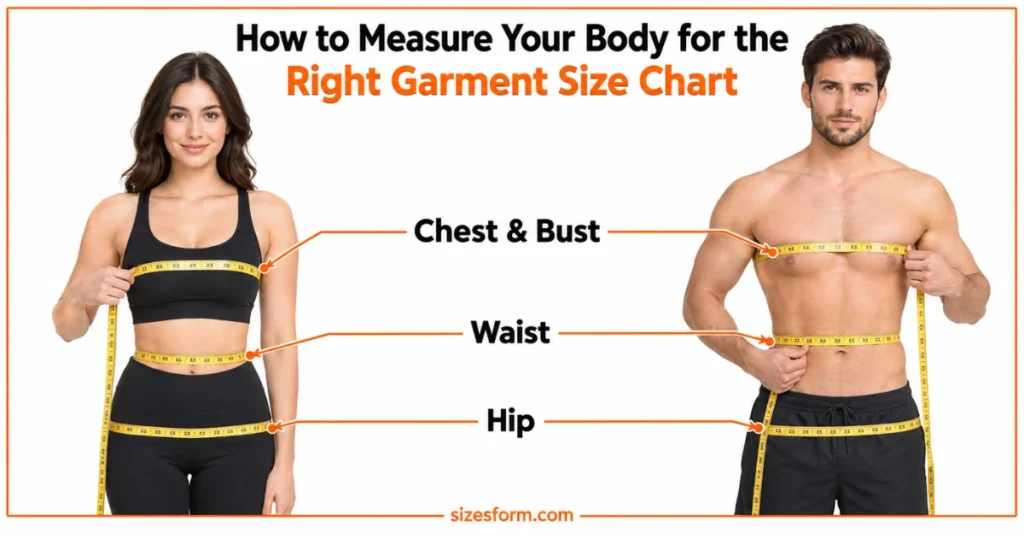
How to Measure Your Body for the Right Garment Size Chart
Chest & Bust
Wrap the tape around the fullest part of the chest or bust, keeping it level across the back. Don’t pull it tight — snug is enough.
Waist
Measure at your natural waistline — the narrowest point of your torso, usually just above the belly button. Breathe normally; don’t suck in.
Hip
Measure around the widest part of your hips and seat, keeping the tape parallel to the floor the whole way around.
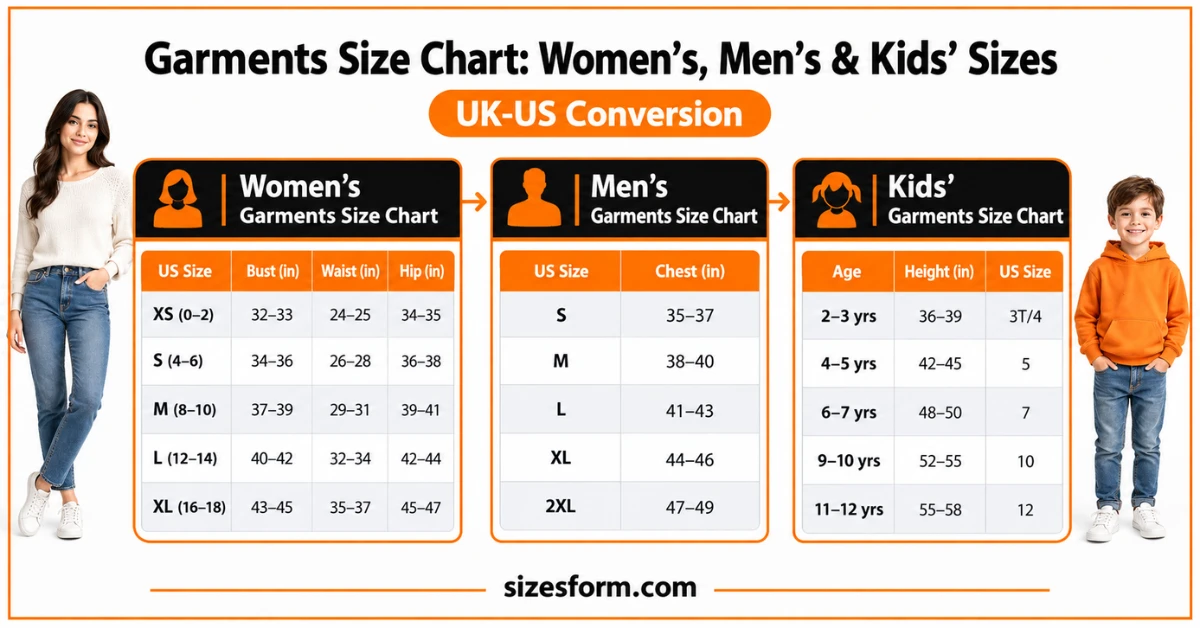
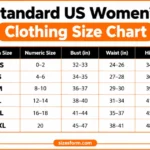
Women’s Garments Size Chart (US Standard)
US Size
Bust (in)
Waist (in)
Hip (in)
XS (0–2)
32–33
24–25
34–35
S (4–6)
34–36
26–28
36–38
M (8–10)
37–39
29–31
39–41
L (12–14)
40–42
32–34
42–44
XL (16–18)
43–45
35–37
45–47
Note:A 29-inch waist sits right on the border between size 8 and size 10 — brand cut decides which side you fall on.
In casual shirts and t-shirts, a 40-inch chest sits at the top of Medium. In suits and jackets, 40 is often labeled Medium-to-Large depending on the brand’s grade rules — the fixed measurement gap a brand uses between each size step.
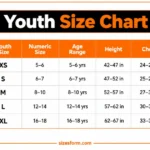
Kids’ Garments Size Chart by Age & Height
Kids’ sizing is less reliable by age alone because growth rates vary widely. Height is the better matching factor.
Age
Height (in)
US Size
2–3 yrs
36–39
3T/4
4–5 yrs
42–45
5
6–7 yrs
48–50
7
9–10 yrs
52–55
10
11–12 yrs
55–58
12
UK Size and US Size Clothes
Women’s UK to US Conversion
The reliable shortcut is the four-number gap rule: add 4 to a US size to get the UK size. A US 6 becomes a UK 10. A US 8 becomes a UK 12. This holds for tops, dresses, and skirts, but not shoes.
Men’s UK to US Conversion
Men’s alpha and chest sizing is nearly identical between the US and UK. A US size Large and a UK size Large use the same chest range. The only real gap shows up in shoe sizing, where UK runs about half a size smaller than US.
Why Garment Sizes Differ Between Brands
Two brands can use the same label and fit completely differently. This isn’t a mistake — it’s a known industry pattern.
Vanity sizing is one driver: brands quietly widen the body measurements behind a label to make shoppers feel smaller. A waist that was labeled size 8 decades ago often matches a size 4 today at some brands.
The other driver is the fit model — the specific body a brand designs its patterns around. A brand using a slimmer fit model will run tight compared to one using a fuller model, even at the identical numeric size.
FAQs
What is garment sizing?
The system — alpha or numeric — a brand uses to label clothing based on body measurements.
Is a 29 waist a size 8 or 10?
It’s the border point — many brands cut size 8 up to 29 inches and size 10 starting at 29 inches.
I am the admin and author of SizesForm, researching, verifying, and explaining measurements, dimensions, weights, and sizes in simple terms to help readers understand everyday comparisons accurately and confidently.