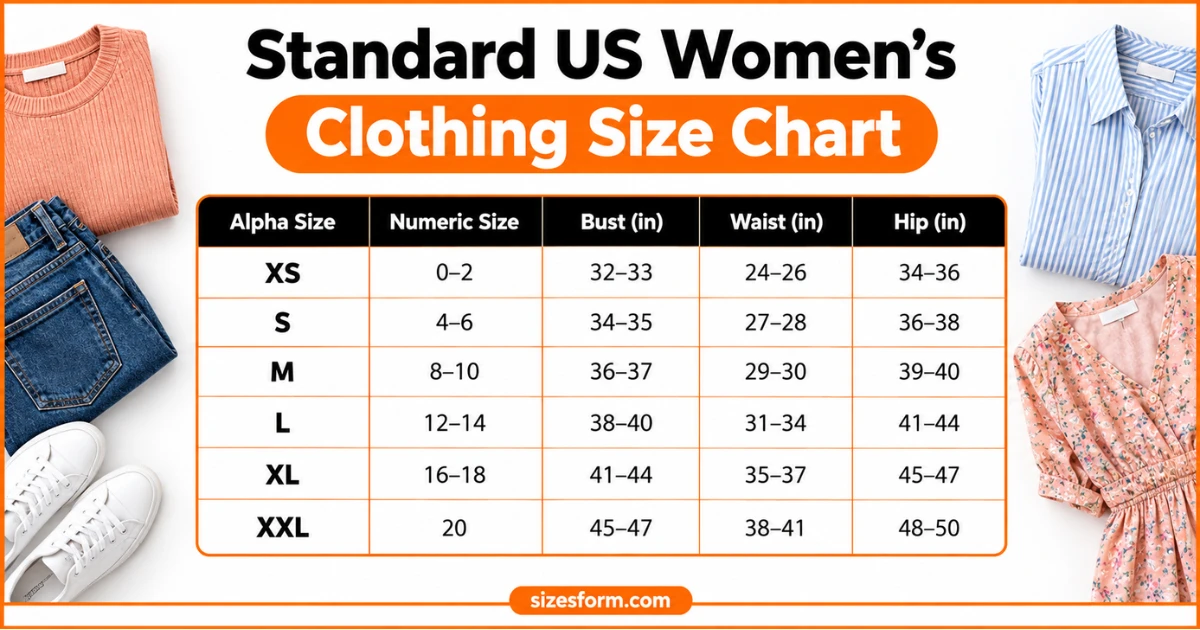
A US women’s size Medium typically means a 36–37″ bust, 29–30″ waist, and 39–40″ hip — size labels map directly to these measurement ranges, not to body type or brand.
This guide breaks down US sizing for pants, dresses, shirts, t-shirts, and skirts, plus a standalone waist chart and a simple method to calculate your size at home.
Standard US Women’s Clothing Size Chart
Alpha sizes (XS to XXL) and numeric sizes (0 to 20). Brands like Saucony, Smartwool, and Nike often print both side by side, since shoppers recognize one system more than the other.
Alpha Size
Numeric Size
Bust (in)
Waist (in)
Hip (in)
XS
0–2
32–33
24–26
34–36
S
4–6
34–35
27–28
36–38
M
8–10
36–37
29–30
39–40
L
12–14
38–40
31–34
41–44
XL
16–18
41–44
35–37
45–47
XXL
20
45–47
38–41
48–50
Notice that a size 14 usually lands in the L range, not XL — the jump to XL typically starts around size 16. This is one of the most searched mix-ups in women’s sizing, and the confusion comes down to one thing: vanity sizing.
Vanity sizing means brands quietly shrink the body measurements tied to each label over time, so a size 8 today fits looser than a size 8 did decades ago. It’s why the same body can be a size 10 at one store and a size 14 at another.
There’s no single ISO standard for women’s clothing — only voluntary references like ASTM D5585, which many US brands ignore or adapt on their own.
Most retailers also sell petite (under 5’4″), regular, and tall (5’8″ and up) inseam options, since a size M waist doesn’t guarantee the right leg length for every height.
Women’s Dress Size Chart
Size
Bust (in)
Waist (in)
Hip (in)
0
32
24–25
35–36
4
34
27–28
38
8
36
29–30
40
12
38–39
32–33
42–43
16
42
35–36
46
18
44
37–38
48
Women’s Shirt Size Chart
Size
Bust (in)
Waist (in)
Sleeve Length (in)
XS
32–33
25–26
31–32
S
34–36
27–29
31–32
M
37–39
30–32
32–33
L
40–42
33–35
33
XL
43–45
36–38
33–34
A shirt that fits the bust but strains across the shoulders usually means the shoulder seam, not the size number, is the real problem — sizing up one size often fixes this without making the rest baggy.
T-shirts run looser than dress shirts, so their charts lean on bust and body length rather than sleeve detail.
Size
Bust (in)
Body Length (in)
XS
31–32
24–25
S
33–35
25–26
M
36–38
26–27
L
39–41
27–28
XL
42–44
28–29
A fitted tee usually sizes down from your bust measurement.
A relaxed or boyfriend-style tee sizes up.
Skirt Size Chart
Skirts fit almost the same way dresses do, built around waist and hip, though a straight or pencil skirt needs a snugger hip measurement than an A-line style.
Size
Waist (in)
Hip (in)
XXS
25
35
XS
26–27
36–37
S
28–29
38–39
M
30–31
40–41
L
32.5–34
42.5–44
XL
35–37
45–47
Waist Size Chart
A waist measurement is especially important for jeans, skirts, and pants, making a standalone waist chart useful for quick size selection.
Size 00: 23–24 in (58–61 cm) waist
Size 0: 24–25 in (61–63 cm) waist
Size 4: 27–28 in (68–71 cm) waist
Size 8: 30–31 in (76–79 cm) waist
Size 12: 32–34 in (81–86 cm) waist
Size 16: 36–38 in (91–96 cm) waist
Size 20: 39–41 in (99–104 cm) waist
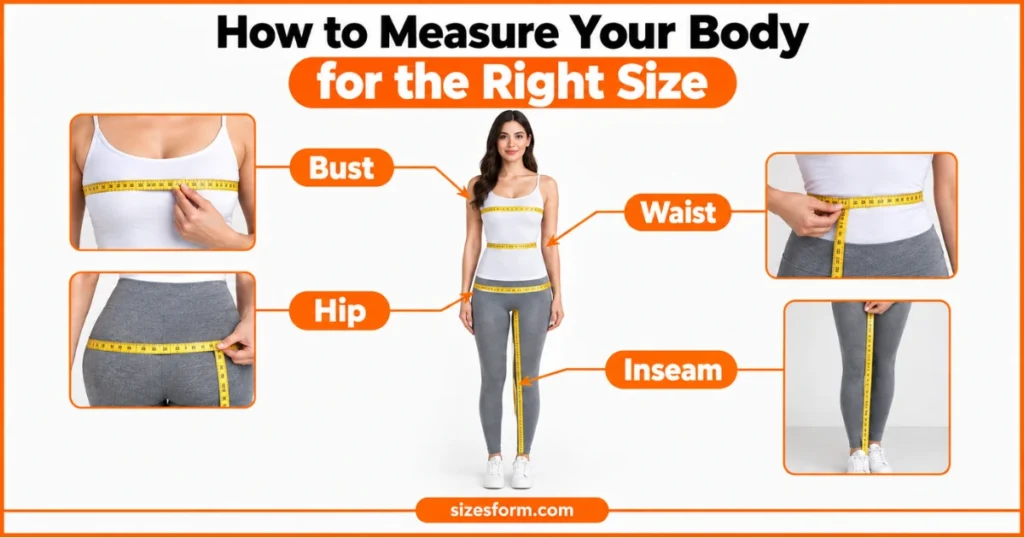
How to Measure Your Body for the Right Size
Every chart on this page depends on three numbers: bust, waist, and hip. Getting them right takes less than two minutes with a soft tape measure.
Bust — Wrap the tape around the fullest part of your chest, keeping it level and snug, not tight.
Waist — Find your natural waistline, the narrowest point above your belly button, and measure around it.
Hip — Stand with feet together and measure around the widest part of your hips and seat.
For pants and skirts, add one more: inseam. Measure from the crotch seam down to where you want the hem to land.
I am the admin and author of SizesForm, researching, verifying, and explaining measurements, dimensions, weights, and sizes in simple terms to help readers understand everyday comparisons accurately and confidently.