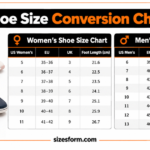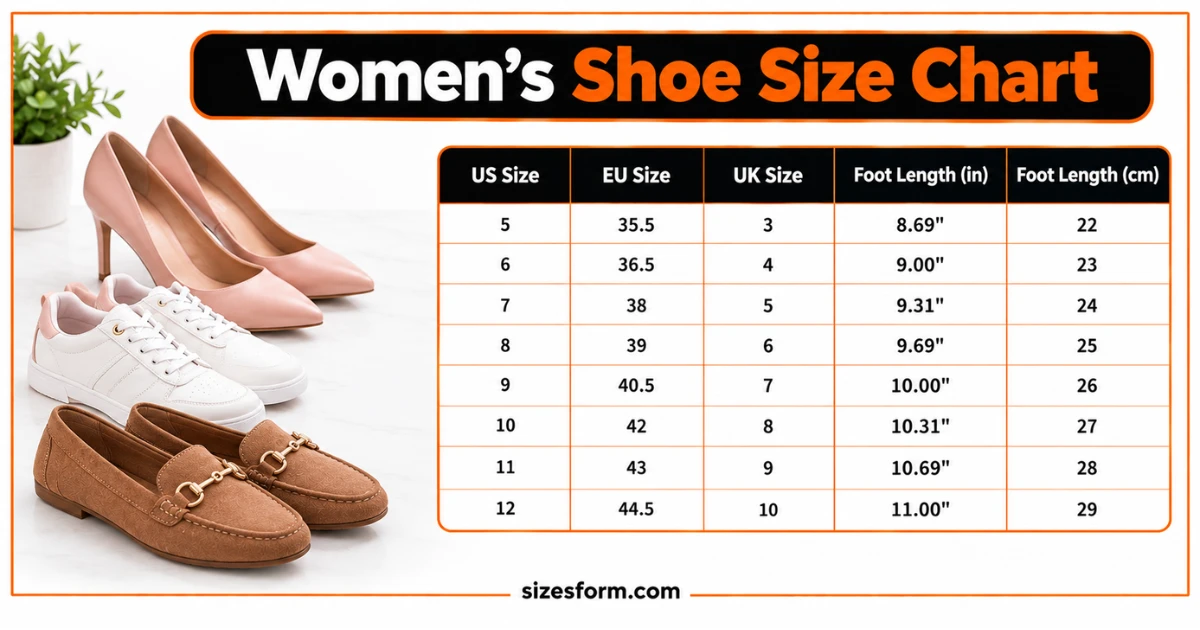
A women’s shoe size chart converts foot length to shoe size: US 5 = 8.69″ (22 cm), US 7 = 9.31″ (24 cm), US 8 = 9.69″ (25 cm), US 9 = 10″ (26 cm), US 10 = 10.31″ (27 cm). In the US, size 8 = EU 39 = UK 6, and the average women’s shoe size is 8.5 to 9.
This guide gives you a clear shoe size chart for women, plus width, height and brand charts. You will also find measuring steps, fit tips and quick answers to common questions.
Women’s Shoe Size Chart
| US Size | EU Size | UK Size | Foot Length (in) | Foot Length (CM) |
|---|---|---|---|---|
| 4 | 34.5 | 2 | 8.31″ | 21 |
| 4.5 | 35 | 2.5 | 8.50″ | 21.5 |
| 5 | 35.5 | 3 | 8.69″ | 22 |
| 5.5 | 36 | 3.5 | 8.81″ | 22.5 |
| 6 | 36.5 | 4 | 9.00″ | 23 |
| 6.5 | 37.5 | 4.5 | 9.19″ | 23.5 |
| 7 | 38 | 5 | 9.31″ | 24 |
| 7.5 | 38.5 | 5.5 | 9.50″ | 24.5 |
| 8 | 39 | 6 | 9.69″ | 25 |
| 8.5 | 40 | 6.5 | 9.81″ | 25.5 |
| 9 | 40.5 | 7 | 10.00″ | 26 |
| 9.5 | 41 | 7.5 | 10.19″ | 26.5 |
| 10 | 42 | 8 | 10.31″ | 27 |
| 10.5 | 42.5 | 8.5 | 10.50″ | 27.5 |
| 11 | 43 | 9 | 10.69″ | 28 |
| 11.5 | 44 | 9.5 | 10.81″ | 28.5 |
| 12 | 44.5 | 10 | 11.00″ | 29 |
Related Post: Kids Shoe Size Chart by Age: Boys, Infant, Baby & Toddler Sizes
Women’s Shoe Width Chart
Length is only half the story. A women’s shoe width chart shows whether you need narrow, medium, wide or extra wide shoes.
| Width | Letter Code | Ball Width, Size 6 | Ball Width, Size 8 | Ball Width, Size 10 |
|---|---|---|---|---|
| Narrow | 2A, A, AA | 2.94″ | 3.19″ | 3.44″ |
| Medium | B | 3.31″ | 3.56″ | 3.81″ |
| Wide | D, E | 3.69″ | 3.94″ | 4.19″ |
Average Ladies Shoe Size
The average ladies shoe size in the US is now about 8.5 to 9. A few decades ago, it was closer to 7 to 7.5.
- Better nutrition during growth years
- More sports and physical activity
- Gradual gains in average height and weight
Average Women’s Shoe Size by Height
Height gives a rough clue about foot length. Taller women usually have longer feet, but width and arch type still matter.
| Height | Typical US Size Range |
|---|---|
| 5’0″ | 5.5 to 7 |
| 5’2″ | 6.5 to 8 |
| 5’3″ | 7 to 8.5 |
| 5’5″ | 7.5 to 9 |
| 5’7″ | 8 to 9.5 |
| 5’9″ | 8.5 to 10.5 |
| 5’11” | 9.5 to 11.5 |
Related Post: Men’s Shoe Size Chart
Women’s Shoe Size Chart by Brand
| Brand | EU | UK | Foot Length |
|---|---|---|---|
| Nike | 39 | 5.5 | 9.69″ (25 cm) |
| Saucony | 39 | 6 | 24.5 cm (JPN) |
| Kenneth Cole | 39 | 6 | 9.75″ |
| Shoe Carnival | 38–39 | 6 | 9.50″ |
Shoe Size Guide by Shoe Type
- Sneakers and running shoes: Leave about a thumb’s width at the toe. Feet swell during activity, so many runners choose a half size up.
- Heels: Check the toe box and heel grip. Your foot should not slide forward.
- Boots: Leave room for thicker socks.
- Sandals and flats: Your heel should sit fully on the footbed.
Related Post: Boot Size Chart for Men, Women & Kids
Why Your Shoe Size Changes
- Age: Ligaments and tendons loosen, so arches can flatten and feet can lengthen.
- Pregnancy: Hormones, weight gain and fluid retention can raise your size.
- Weight changes: Extra weight can spread the foot wider.
- Activity level: Runners and dancers may see shape changes over time.
- Genetics: Foot length, arch type and toe shape often run in families.
How to Measure Your Foot at Home
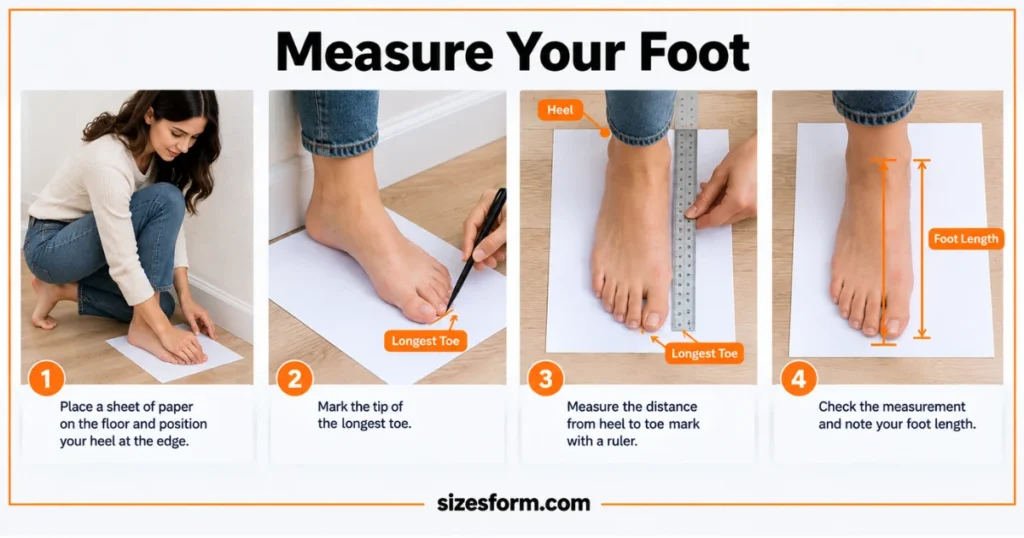
- Tape paper to a hard floor
- Mark your heel and longest toe, then measure the gap in inches or cm
- Measure in the evening, when feet are at their largest
- Wear the socks you plan to pair with the shoes
- If you fall between two sizes, size up
For the full step-by-step method, see our Shoe Size Chart guide.
FAQs
What size shoe should a 5’2″ woman wear?
Most women at 5’2″ wear a US 6.5 to 8, depending on width and arch type.
What shoe size is average for someone who is 5’3″?
It usually falls between a US 7 and 8.5.
Why did my feet get bigger all of a sudden?
Common causes are pregnancy, weight gain, swelling and hormonal changes, so see a doctor if it comes with pain.
Is it better to get slightly bigger or smaller shoes?
Slightly bigger is better, because tight shoes can cause blisters, bunions and pain.

I am the admin and author of SizesForm, researching, verifying, and explaining measurements, dimensions, weights, and sizes in simple terms to help readers understand everyday comparisons accurately and confidently.
Related Posts: